In a strange and sudden turn of events, my doctor's clinic closed a few months ago. It wasn't really a problem except for the fact that my meds were all in need of reauthorization. After a few days (by which I mean weeks) of phone tag, I eventually got my doc to refill my script for Effexor only to find that the pharmacy gave me Venlafaxine HCL instead of Venlafaxine HCL XR. That XR is crucial, in that it stands for extended relief.
To be honest, I haven't felt any difference in its efficacy. If anything, I'm less tired and cataplexy-y on this version of the drug. The problem though, which you can read about on an drug review site, is that the XR has fewer and subtler side effects. Specifically people say that nausea associated with Effexor is less invasive with the XR.
On the version of the drug I'm taking now, I'm not nauseous all the time, but the following activities do trigger some SERIOUS dry heaving:
- Exercise
- Eating
- Getting out of bed
- Drying my hair
- Doing my laundry
- Going up stairs
- Going down stairs
- Thinking about stairs
- Vigorous stretching
- Standing up
I've also had a pounding in headache for two days (I started the new drug four days ago). Now I did have 1.5 PBR's on Friday, so it could be that. It seems unlikely though.
There are a lot of correlations between narcolepsy and extreme weight gain (possibly because of the amount of time spent resting, or because of the body's natural inclination to stock up on calories in response to fatigue). I'm thinking Effexor nausea may be the cure for that! Right now, in order to eat something, I would have to stand up, which would cause the nausea, and would probably eliminate the urge to eat.
The way I see it, there are three possible outcomes of this medicine switch:
1. I'm gonna get freakin' hot and lose those winter LBs
2. I'm going to die of starvation
3. I'm gonna power through and continue to eat the way I do now but just feel like vomiting on my way to the fridge.
Option 1 would be nice, but I have a feeling #3's gonna make a strong run...
Sunday, March 17, 2013

Monday, February 11, 2013
Man's best friend
Lately I've had an intense desire to be around dogs. Even dogs that, in earlier phases of my life, might have made me feel uncomfortable are suddenly the most wonderful and fascinating things in the world. I submitted an adoption application for a dog (a 4-year-old labrador retriever/Australian shepherd mix) and I've been trying to think of what I will say to people when they inevitably ask, "Can you handle taking care of a dog?"
The question is completely fair. I complain that I don't have the energy to get groceries. How am I supposed to walk, feed, and care for a living thing? Well, for one thing, I won't be alone. My wonderful roommates will be able to help out quite a bit if and when we welcome a dog into the home.
This need to justify my dog obsession also got me wondering about how dogs could be used in therapeutic settings with narcolepsy and other sleep disorders. Turns out some people suffering from narcolepsy with cataplexy actually work with service dogs that make their lives more livable. Here is a sweet story of a girl in the UK whose life was turned around by a narcolepsy service dog:
"Service Dog Aids a Narcoleptic Teen
Could an untrained dog do some of these things for me? Can any old mutt detect when one is about to have a narcoleptic episode, or was Theo particularly prepared?
In this example from Belgium, it explains a little more about how these dogs are trained for this specific task.
"Narcoleptic Dog Own Gets New 'Leash' On Life"
However, a story from here in Boston about an adorable mutt named Shoebox gives the impression that dogs can sense cataplexy episodes without training. Giving them specific protocol to follow if an owner is having an episode would be the added bonus of any instruction.
So basically, I want a dog and these promising finding from all over the world leave me feeling prepared to answer for myself when people say, "Can you really handle taking care of a dog?" Not only do I think I can do it, but I'm pretty sure the dog will also be taking care of me.
The question is completely fair. I complain that I don't have the energy to get groceries. How am I supposed to walk, feed, and care for a living thing? Well, for one thing, I won't be alone. My wonderful roommates will be able to help out quite a bit if and when we welcome a dog into the home.
This need to justify my dog obsession also got me wondering about how dogs could be used in therapeutic settings with narcolepsy and other sleep disorders. Turns out some people suffering from narcolepsy with cataplexy actually work with service dogs that make their lives more livable. Here is a sweet story of a girl in the UK whose life was turned around by a narcolepsy service dog:
"Service Dog Aids a Narcoleptic Teen
Could an untrained dog do some of these things for me? Can any old mutt detect when one is about to have a narcoleptic episode, or was Theo particularly prepared?
In this example from Belgium, it explains a little more about how these dogs are trained for this specific task.
"Narcoleptic Dog Own Gets New 'Leash' On Life"
However, a story from here in Boston about an adorable mutt named Shoebox gives the impression that dogs can sense cataplexy episodes without training. Giving them specific protocol to follow if an owner is having an episode would be the added bonus of any instruction.
So basically, I want a dog and these promising finding from all over the world leave me feeling prepared to answer for myself when people say, "Can you really handle taking care of a dog?" Not only do I think I can do it, but I'm pretty sure the dog will also be taking care of me.
Tuesday, February 5, 2013
The words right out of my mouth
Youtube recommended this video to me today. This gal is super articulate and comprehensive. If you want a real clear explanation of how narcolepsy and cataplexy affect daily life, give it a look:
It sounds like her case is slightly more severe than mine, but the emotional, professional, and personal fall out is the same. I love that she giggles and smiles the whole time, and that she is her own best advocate in terms of learning about narcolepsy and about the newest treatments.
So, whoever you are, thank you :-)
It sounds like her case is slightly more severe than mine, but the emotional, professional, and personal fall out is the same. I love that she giggles and smiles the whole time, and that she is her own best advocate in terms of learning about narcolepsy and about the newest treatments.
So, whoever you are, thank you :-)
Sunday, February 3, 2013
Fear of Feeling
This morning, I was on the phone with a close friend who has been with me through every difficult moment of my narcoleptic journey. I was saying to her, "I wish there was a way I could express how grateful I am..." and then I went silent. I could no longer hold the phone to my face or convince my tongue and jaw to form words. My eyelids refused to stay up, and before I knew it, my neck and shoulders gave out. With my neck unable to support even the slightest weight, my face fell to the table top, pressing my nose and mouth so firmly against the wood that it became difficult to breath. In my mind, I encouraged myself, "Tell her to call 911! Ask her to come over and help!" But in that minute, not even the muscles in my throat were under my control enough to conjure a moan or a scream or a whisper. After a few seconds, I was able to catch a breath deep enough that I could whine into the phone. My friend, confused and frightened on the other end of the receiver must have thought I was just crying hysterically, because she was clearly trying to provide comfort and support. Her kind words however, we so touching that they actually made me more emotional, causing the little bit of muscle control I'd regained to drain away until, once again, I was being suffocated by an antique hand-crafted heirloom.
Using strategies I had read about online, I was able to calm myself enough that I could ask her to stop talking. I explained in slurred speech that I was having a cataplectic attack and that I was OK. More over that as soon as I could walk, I was going to get into bed, because it was the only safe place for me to be.
My friend, compassionate and concerned as she was, insisted that she wanted to come sit with me for the day to be sure I was alright, but I resisted. While I claimed it was because I just wanted to rest, the reality is that I was humiliated that she had witnessed, even if only through the phone, the worst cataplexy attack since my diagnosis in 2009; and that I had never felt more afraid and impotent in my entire life.
The experience chronicled above is why I will not be watching the SuperBowl today. It's why I don't feel like I can safely go to the basement to do my laundry or drive to the grocery store. It's why, as I'm typing this, I'm debating whether or not to get up and go to the bathroom. On the one hand, I'm afraid to test my legs. On the other hand, if I lose muscle control, will I also lose control of my bladder? This is why I'm struggling to choose a movie on Netflix right now. If it's too funny, I might lose control again, but if it's sad, I will definitely not be able to maintain physical strength. I need something that is neither funny nor at all emotional, yet is still engaging. Does that exist? This is the thought process of someone who has learned to fear feeling.
Stereotypically, men are thought to have trouble getting in touch with their emotions. What is it they are afraid of? Vulnerability? Exposing their true selves? Or is the stereotype no more than a myth?
In the case of cataplexy, fear of feeling comes from something more concrete and physiological. Essentially, as I've explained in prior blog entries, cataplexy is marked by the loss of muscle tone in response to extreme emotional reactions. So a funny joke, a moment of deep grief, or a sharp shock will leave one feeling tingly, numb, or in the worst case, incapacitated.
In the past, I've joked about cataplexy (a cataplectic being chased by a bear is doomed, because the fear of the bear would result in a loss of muscle tone that would make it excessively easy prey...and so on). There is something undeniably bizarre and lovable about it.
For instance, watch this short video of a man and his wife laughing hysterically because he farted. See what happens toward the end of his laughing fit...
Using strategies I had read about online, I was able to calm myself enough that I could ask her to stop talking. I explained in slurred speech that I was having a cataplectic attack and that I was OK. More over that as soon as I could walk, I was going to get into bed, because it was the only safe place for me to be.
My friend, compassionate and concerned as she was, insisted that she wanted to come sit with me for the day to be sure I was alright, but I resisted. While I claimed it was because I just wanted to rest, the reality is that I was humiliated that she had witnessed, even if only through the phone, the worst cataplexy attack since my diagnosis in 2009; and that I had never felt more afraid and impotent in my entire life.
The experience chronicled above is why I will not be watching the SuperBowl today. It's why I don't feel like I can safely go to the basement to do my laundry or drive to the grocery store. It's why, as I'm typing this, I'm debating whether or not to get up and go to the bathroom. On the one hand, I'm afraid to test my legs. On the other hand, if I lose muscle control, will I also lose control of my bladder? This is why I'm struggling to choose a movie on Netflix right now. If it's too funny, I might lose control again, but if it's sad, I will definitely not be able to maintain physical strength. I need something that is neither funny nor at all emotional, yet is still engaging. Does that exist? This is the thought process of someone who has learned to fear feeling.
Stereotypically, men are thought to have trouble getting in touch with their emotions. What is it they are afraid of? Vulnerability? Exposing their true selves? Or is the stereotype no more than a myth?
In the case of cataplexy, fear of feeling comes from something more concrete and physiological. Essentially, as I've explained in prior blog entries, cataplexy is marked by the loss of muscle tone in response to extreme emotional reactions. So a funny joke, a moment of deep grief, or a sharp shock will leave one feeling tingly, numb, or in the worst case, incapacitated.
In the past, I've joked about cataplexy (a cataplectic being chased by a bear is doomed, because the fear of the bear would result in a loss of muscle tone that would make it excessively easy prey...and so on). There is something undeniably bizarre and lovable about it.
For instance, watch this short video of a man and his wife laughing hysterically because he farted. See what happens toward the end of his laughing fit...
The man is not asleep. He is 100% awake during the entire experience. However, the muscles in his jaw, face, neck, arms, legs, abs, and everywhere else for that matter, are reacting the way they would if he was in a state of REM sleep. You see, the reason you don't act our your dreams in a typical night of sleep is because your brain paralyzes the body during REM. The brain has evolved over time to protect itself from self-harm. If the body weren't paralyzed during REM, you would suffer a disorder like the one Mike Birbiglia depicts in his autobiographical film, Sleepwalk with Me. Check it out:
So back to cataplexy. Essentially, when narcoleptics sleep, they are constantly in REM. Somewhere along the line, however, the brain and body ceased producing hypocretin (the neurotransmitter responsible for signaling arousal, wakefulness, and appetite). So, along with the mixed messages received during REM, it also occasionally tells the body, "Quick! You're feeling some extreme emotion! Paralyze yourself STAT!" And that is cataplexy. So when I, or any narcoleptic with cataplexy feels something suddenly and intensely, our brains stay awake and alert, but our bodies literally become paralyzed.
In the short Youtube video below, you can see why this has potential to be such a depressing diagnosis, particularly in the case of a child like Robin:
This blog post is called "Fear of Feeling," and poor Robin illustrates the point as well as anyone could. For Robin, the small act of skipping makes her happy, which in turn sends her crumbling to the ground, which in turn erases the pleasure from skipping. How does a child find enjoyment in the world when the body repays it in such humiliating and scary ways?
I, luckily, did not develop this disorder until later in life, so I know that the things I love, even if they briefly paralyze me, are worth pursuit. So despite the fact that I experience moments of cataplexy every time I watch football with my friends, I continue to go and laugh and hope that I don't look too insane when my face is struck numb from pleasure. As a close friend once said about the disorder, "There is still joy to be had."
I believe her when it comes to joy. In fact, at first my cataplexy was triggered solely by laughter, so it was almost a welcome sensation. If I couldn't feel my face, it meant that I was incredibly happy and amused. Over time, however, the disorder has generalized, leaving me in constant pursuit of emotional numbness to assure physical sensation. It's an odd dichotomy when you think of it in those terms. If you feel emotionally, your body will be paralyzed. As long as you are emotionally numb, your body remains your own.
My experience this morning was bar none the scariest minute of my life. Alone in my apartment, struck mute and motionless by the simple desire to tell a friend I love her, I wanted nothing more than to be asleep. The consciousness is the curse. Wishing you could will your body to move or your eyes or open or your head to turn, and knowing that the lines of communication between body and mind were cut off for the time being. The panic must be how it feels to be drowning.
Luckily I was not hurt and was able to drag myself to bed soon after my episode. But how does one go forward from here? How do I live my life avoiding grief, sadness, joy, and humor? Those are not things we seek out; they are not optional. So instead I forge ahead living in a constant low level state of fear, thinking, Careful Rachel. Don't feel too much...
Saturday, September 29, 2012
An important (and frightening) transition
While narcolepsy is misunderstood by the vast majority of the general public, many if not most people could tell you that it has to do with falling asleep too much or in weird places. So even the lay-est of laymen can understand the counter-intuition required in medicating it’s cousin, cataplexy.
Now, for those people who may not be familiar with cataplexy, it is the sudden loss of muscle tone in response to emotion. It’s just another happy side effect of a brain that does not produce Orexin A/Hypocretin. Because modern medicine is not yet able to replace or synthesize Orexin in the brain, we are left to treat the effects of its absence - namely narcolepsy and cataplexy - separately. Treating the daytime somnolence is as simple as getting through a workday after a late night: caffeine, stimulants, and naps as needed. In fact, most people who have taken Provigil/Nuvigil will probably tell you that it is a miracle drug which, taken in the right dose, essentially cures daytime sleepiness. The cataplexy is a little more complicated though...
There are two courses of action one can undertake to deal with cataplexy. Well, if you count inaction as a course of action, I suppose there are three.
Option 1: Suck it up!
Cataplexy is not painful or fatal, so many people choose just to live with it and avoid listening to “Storycorp” on their Friday morning commutes, as the NPR-induced emotional roller coaster will inevitably cause a cataplectic attack. My incredibly loveable and brilliant doctor suggested I try this option for a while, adding the crucial caveat, “No jokes in the car!”
The obvious drawback of this option is that emotions do not adhere to your, or any, schedule. I gave up on this option when I imagined one day getting engaged. Maybe we’re walking down a scenic beach or sitting in front of a crackling fire. Then, when Mr. Right gets down on one knee, in all my excitement I fall to the ground like a rag doll. Before my brain can tell my muscles that they are behaving inappropriately, Prince Charming has grabbed his coat, made his way to the door, and has already changed his Facebook status to “Single.”
Option 2: Serotonin-Norepinephrine Reuptake Inhibitors (SNRIs)
There is no real simple way to explain what is happening when I have a cataplectic attack, so if you don’t like sciencey jargon, you may want to skip ahead to the next paragraph. If you DO like science, Focus Journal reported on a number of the mechanisms that seem to malfunction in patients with cataplexy. Patrick (2009) saw in a collection of neuroimaging studies that cataplexy had to do with overactivity in the amygdala and other portions of the limbic system. What is boils down to is, “if hypocretin levels are reduced, dopaminergic activity in the prefrontal cortex and anterior cingulate cortex could be impaired. This in turn may allow the amygdala to become overly activated and result in cataplexy.” Low levels of dopamine and noradrenaline allow the amygdala to run wild whenever I have an emotional response, and this triggers a form of muscle atonia similar to that of REM sleep, except I’m awake...
Ok, so back to not science: one of the most popular ways to treat cataplexy is with a class of antidepressants called SNRIs, specifically Effexor. One’s immediate reaction to that is, “SWEET! I get to have control over my muscles AND my mood will improve? [high five nearest person]”. Not to fast...Effexor, in its younger days, was not-so-affectionately called “Side effexor,” because IT SUCKS!
According to the NIH website, side effects include:
And this is the second generation of the drug which cut out all of the “serious” side effects. But Rachel, you say, every drug has lots of side effects. The problem with Effexor for cataplexy though is that one of the more common side effects is insomnia (or as my doctor called it, “early morning waking,” where “early” means 4:30). So let’s do the math here...
Narcolepsy (excessive sleepiness) + Insomnia (inability to sleep at night) = Aw hell no!
In fact, the exhaustion from the insomnia has gotten to a point that my usual dose of Nuvigil (which keeps me awake during the day) is no longer enough. I am back to my old narcoleptic ways, including sleeping at work, at the gym, at friend’s houses, in line at stores, and pretty much anywhere. In other words, option 2 has got to go.
Option #3: Xyrem
Never heard of this one? Maybe you know it by it’s more common “street” name: GHB. Yes, the club drug - Georgia Homeboy? Fantasy? Liquid Ecstasy? G? Yes, that one. Xyrem can be used beyond curing cataplexy and “really feeling the music” as a paint stripper and a date rape drug. It’s a Jack (the ripper) of all trades. So again, some math:
Narcolepsy (excessive sleepiness) + Xyrem (a roofie) = ????
Am scared to try Xyrem? Definitely. However having spoken to narcoleptics who take it and having read commentary on sites like Patients Like Me and in medical journals, I think it might be the right course of action. And if it’s not, I just hope whoever proposes to me someday has the foresight to have me sit down first.
Now, for those people who may not be familiar with cataplexy, it is the sudden loss of muscle tone in response to emotion. It’s just another happy side effect of a brain that does not produce Orexin A/Hypocretin. Because modern medicine is not yet able to replace or synthesize Orexin in the brain, we are left to treat the effects of its absence - namely narcolepsy and cataplexy - separately. Treating the daytime somnolence is as simple as getting through a workday after a late night: caffeine, stimulants, and naps as needed. In fact, most people who have taken Provigil/Nuvigil will probably tell you that it is a miracle drug which, taken in the right dose, essentially cures daytime sleepiness. The cataplexy is a little more complicated though...
There are two courses of action one can undertake to deal with cataplexy. Well, if you count inaction as a course of action, I suppose there are three.
Option 1: Suck it up!
Cataplexy is not painful or fatal, so many people choose just to live with it and avoid listening to “Storycorp” on their Friday morning commutes, as the NPR-induced emotional roller coaster will inevitably cause a cataplectic attack. My incredibly loveable and brilliant doctor suggested I try this option for a while, adding the crucial caveat, “No jokes in the car!”
The obvious drawback of this option is that emotions do not adhere to your, or any, schedule. I gave up on this option when I imagined one day getting engaged. Maybe we’re walking down a scenic beach or sitting in front of a crackling fire. Then, when Mr. Right gets down on one knee, in all my excitement I fall to the ground like a rag doll. Before my brain can tell my muscles that they are behaving inappropriately, Prince Charming has grabbed his coat, made his way to the door, and has already changed his Facebook status to “Single.”
Option 2: Serotonin-Norepinephrine Reuptake Inhibitors (SNRIs)
There is no real simple way to explain what is happening when I have a cataplectic attack, so if you don’t like sciencey jargon, you may want to skip ahead to the next paragraph. If you DO like science, Focus Journal reported on a number of the mechanisms that seem to malfunction in patients with cataplexy. Patrick (2009) saw in a collection of neuroimaging studies that cataplexy had to do with overactivity in the amygdala and other portions of the limbic system. What is boils down to is, “if hypocretin levels are reduced, dopaminergic activity in the prefrontal cortex and anterior cingulate cortex could be impaired. This in turn may allow the amygdala to become overly activated and result in cataplexy.” Low levels of dopamine and noradrenaline allow the amygdala to run wild whenever I have an emotional response, and this triggers a form of muscle atonia similar to that of REM sleep, except I’m awake...
Ok, so back to not science: one of the most popular ways to treat cataplexy is with a class of antidepressants called SNRIs, specifically Effexor. One’s immediate reaction to that is, “SWEET! I get to have control over my muscles AND my mood will improve? [high five nearest person]”. Not to fast...Effexor, in its younger days, was not-so-affectionately called “Side effexor,” because IT SUCKS!
According to the NIH website, side effects include:
- drowsiness
- weakness or tiredness
- dizziness
- headache
- nightmares
- nausea
- vomiting
- stomach pain
- constipation
- diarrhea
- gas
- heartburn
- burping
- dry mouth
- change in ability to taste food
- loss of appetite
- weight loss
- uncontrollable shaking of a part of the body
- pain, burning, numbness, or tingling in part of the body
- muscle tightness
- twitching
- yawning
- sweating
- hot flashes or flushing
- frequent urination
- difficulty urinating
- sore throat, chills, or other signs of infection
- ringing in the ears
- changes in sexual desire or ability
- enlarged pupils (black circles in the middle of the eyes)
And this is the second generation of the drug which cut out all of the “serious” side effects. But Rachel, you say, every drug has lots of side effects. The problem with Effexor for cataplexy though is that one of the more common side effects is insomnia (or as my doctor called it, “early morning waking,” where “early” means 4:30). So let’s do the math here...
Narcolepsy (excessive sleepiness) + Insomnia (inability to sleep at night) = Aw hell no!
In fact, the exhaustion from the insomnia has gotten to a point that my usual dose of Nuvigil (which keeps me awake during the day) is no longer enough. I am back to my old narcoleptic ways, including sleeping at work, at the gym, at friend’s houses, in line at stores, and pretty much anywhere. In other words, option 2 has got to go.
Option #3: Xyrem
Never heard of this one? Maybe you know it by it’s more common “street” name: GHB. Yes, the club drug - Georgia Homeboy? Fantasy? Liquid Ecstasy? G? Yes, that one. Xyrem can be used beyond curing cataplexy and “really feeling the music” as a paint stripper and a date rape drug. It’s a Jack (the ripper) of all trades. So again, some math:
Narcolepsy (excessive sleepiness) + Xyrem (a roofie) = ????
Am scared to try Xyrem? Definitely. However having spoken to narcoleptics who take it and having read commentary on sites like Patients Like Me and in medical journals, I think it might be the right course of action. And if it’s not, I just hope whoever proposes to me someday has the foresight to have me sit down first.
Sunday, June 10, 2012
"Zat is why zay call me ze internacional vampeer"
Today I got a chance to meet with the world's #1 narcolepsy researcher, Emmanuel Mignot from Stanford University's Center for Narcolepsy. I'm kind of in love with him.
Here's a short summary of Dr. Mignot's take on narcolepsy:
Top 10 take aways from my time with Dr. Mignot:
10) French accents are adorable
9) There is some connection between strep throat and narcolepsy. The connection is hazy, but definitely present. The fact I got strep A LOT as a kid is clearly not a coincidence.
8) Cataplexy (the sudden loss of muscle tone in response of humor and joy) gets better over time! Winning!
7) Cataplexy, after a certain point, can be controlled to an extent once the patient gets a strong understanding of what brings it on.
6) Xyrem, the date rape drugs turned cataplexy cure, is a must have. I avoided it for the last six months because it's scary to take a date rape drug by choice, but after seeing Dr. Mignot's slides I'm optimistic about how it might be able to help me. Essentially, you sleep so deeply when taking Xyrem that it reduces your "sleep debt" and you simply feel less tired the next day.
5) Hypocretin, the molecule that narcoleptics lack, looks an awful lot like H1N1/swine flu. There is a lot of evidence that certain H1N1 vaccines actually cause narcolepsy because they attack hypocretin as well as H1N1 (DON'T PANIC! The vaccines that did this were only approved in Europe, so Americans are OK).
4) Narcolepsy and cataplexy are way more severe in children than adults. I was lucky.
3) The gene for narcolepsy, HLA-DQB1*0602, expresses itself on white blood cells. Then, when there are foreign agents (viruses, diseases, etc) in the blood stream, the white blood cells bind with them and trigger T-cells to fight infection or disease or whatever. This particular gene, however, when it binds with the white blood cells begins fighting hypocretin producing cells. Since hypocretin is what keeps us awake, the destruction of those cells = narcolepsy. Make sense?
2) There are only about 1,500 diagnosed cases of narcolepsy in China. There are probably closer to 400,000 people there with the disease. Awareness is still a major battle worldwide.
1) We are really close to a cure. Once pharma can develop an agonist (a drug that can cross the blood brain barrier) that works with the synthetic forms of hypocretin that are already out there, narcoleptics will be able to supplement their lost hypocretin and return to a much more normal level of function.
This guy is AMAZING and I was honored to give him what felt like most of my blood. In his adorable French accent he apologized for being such a vampire, hence the title of this particular post.
For more info on Dr. Mignot's research, go to Stanford's Center for Narcolepsy site. For links to other relevant research, try the Narcolepsy Network.
Want to get involved? There's a great non-profit called Wake Up Narcolepsy who I'm sure could use your help!
Here's a short summary of Dr. Mignot's take on narcolepsy:
Top 10 take aways from my time with Dr. Mignot:
10) French accents are adorable
9) There is some connection between strep throat and narcolepsy. The connection is hazy, but definitely present. The fact I got strep A LOT as a kid is clearly not a coincidence.
8) Cataplexy (the sudden loss of muscle tone in response of humor and joy) gets better over time! Winning!
7) Cataplexy, after a certain point, can be controlled to an extent once the patient gets a strong understanding of what brings it on.
6) Xyrem, the date rape drugs turned cataplexy cure, is a must have. I avoided it for the last six months because it's scary to take a date rape drug by choice, but after seeing Dr. Mignot's slides I'm optimistic about how it might be able to help me. Essentially, you sleep so deeply when taking Xyrem that it reduces your "sleep debt" and you simply feel less tired the next day.
5) Hypocretin, the molecule that narcoleptics lack, looks an awful lot like H1N1/swine flu. There is a lot of evidence that certain H1N1 vaccines actually cause narcolepsy because they attack hypocretin as well as H1N1 (DON'T PANIC! The vaccines that did this were only approved in Europe, so Americans are OK).
4) Narcolepsy and cataplexy are way more severe in children than adults. I was lucky.
3) The gene for narcolepsy, HLA-DQB1*0602, expresses itself on white blood cells. Then, when there are foreign agents (viruses, diseases, etc) in the blood stream, the white blood cells bind with them and trigger T-cells to fight infection or disease or whatever. This particular gene, however, when it binds with the white blood cells begins fighting hypocretin producing cells. Since hypocretin is what keeps us awake, the destruction of those cells = narcolepsy. Make sense?
2) There are only about 1,500 diagnosed cases of narcolepsy in China. There are probably closer to 400,000 people there with the disease. Awareness is still a major battle worldwide.
1) We are really close to a cure. Once pharma can develop an agonist (a drug that can cross the blood brain barrier) that works with the synthetic forms of hypocretin that are already out there, narcoleptics will be able to supplement their lost hypocretin and return to a much more normal level of function.
This guy is AMAZING and I was honored to give him what felt like most of my blood. In his adorable French accent he apologized for being such a vampire, hence the title of this particular post.
For more info on Dr. Mignot's research, go to Stanford's Center for Narcolepsy site. For links to other relevant research, try the Narcolepsy Network.
Want to get involved? There's a great non-profit called Wake Up Narcolepsy who I'm sure could use your help!
Sunday, May 13, 2012
They're all gonna laugh at you...
I never told anyone this, but when I was really young I secretly wanted to be a stand-up comedian. I didn't tell my parents, because short of pursuing a career in paper meché or something, comedy was just about the least promising field a loving parent could imagine. But still, nothing made me happier than making others laugh. So, in preparation for my entrance into the dog-eat-dog world of professional comedy, I began studying Comedy Central with the tenacity I imagine pre-law students bring to their LSATs. As my family can tell you, I memorized entire seasons, whole generations of "Saturday Night Live" sketches, and lauded Lorne Michaels and his not-ready-for-prime-time-players not just for their ability to deliver a joke, but for the obvious intelligence that was required to do their job well.
Now, I have given up my dream of becoming a comedian, instead becoming a teacher (which is not too different from stand-up in some ways), but I do still have the deepest, most profound respect for good comedy, and good comedy writing in particular. That is why it felt like God, or at least the execs at NBC and Hulu, had granted me the greatest gift imaginable when the entire "Saturday Night Live" collection was made available to stream online. If I felt so inclined, I could watch all 37 seasons without getting out of bed. Luckily my schedule prevents me from doing just that, but I do put on a classic episode now and again when a have an hour to spare.
This morning I put on an episode from 1990, hosted by a dashing Dennis Quaid. Twenty-two years later, I still remembered at least three-quarters of Dana Carvey's George H.W. Bush cold open, including one of my all-time favorite Carvey lines [regarding the gulf war]: "We learned well the valuable lesson of Vietnam. Stay. Out. of Viet. Nam." I guess you had to be there...
Either way, the cold open was followed by a familiar monologue (delivered of course by Quaid) and then the opening theme for a Sally Jesse Raphael skit. As soon as I saw Jan Hooks in her big glasses and blond wig, I couldn't help but murmur, "Oh no..." The skit was called "Narcoleptic Hunks" and in this case the title says it all. I remembered immediately.
(I can't find the clip by itself, but the full episode is streaming at: http://www.hulu.com/watch/198095/saturday-night-live-dennis-quaid)
At any rate, Sally Jesse interviews Dennis Quaid, Phil Hartman, and Mike Meyers about how their sleep disorder affects their love lives and professional lives, which are my two biggest concerns when it comes to my narcolepsy. A thoughtful and sensitive line of questioning thought up by the brilliant writing staff once again. What bothers me though is the description of the disorder that Sally Jesse reads to her audience in the sketch:
"We all know what a 'hunk' is, or at least we all have our own definition of such. But do we know what narcolepsy is? Well, for your information, [reading from an index card] narcolepsy is a syndrome in which one is subject to recurrent, brief attacks of involuntary sleep."
Granted, a lot of advances and discoveries have been made about narcolepsy in the past twenty years, know what came up when I plugged this definition into google? Nothing. No hits. This was never the definition of the disorder, nor is it an accurate depiction of what most narcoleptics go through. "Involuntary" sleep occurs only as result of people fighting the extreme day-time fatigue that is present for all narcoleptics, the same way you might fall asleep involuntarily after pulling an all-nighter. That is very different than what we see on screen here. In fact, what they depict on SNL is much closer to something you would see in sleep apnea patients, but that one's not funny enough to break into TV just yet. For the sake of comedy, this definition of narcolepsy is the only one with any value.
Tired people?
Not funny.
People who fall asleep uncontrollably in inappropriate situations? Comedy gold.
So on the one hand, I get it. Even I have to laugh at narcolepsy sometimes, particularly now that my cataplexy symptoms have increased. And isn't it better to bring attention to such an under diagnosed disorder, even if the attention is a bit misleading?
The problem with this is obvious. If people know nothing about narcolepsy, which isn't flashy or well understood even by doctors, they have no reason to be skeptical about a sketch like "Narcoleptic Hunks." For some reason, the fact that Hooks reads the definition off an index card makes it sound like it's from a textbook though. That damn 3x5 card makes her appear like a legitimate authority.
SNL cannot take all the heat for this either. Perhaps the worst misrepresentation of narcolepsy I've ever seen was in that cinematic gem, "Deuce Bigalow: Male Gigolo."
In this case, not only do they exaggerate the symptoms of this woman's narcolepsy, but having her list the things she CAN'T do has two effects: for one, it makes narcolepsy seem like a handicap or a disability of some kind. More troubling, it makes it look like a psychological condition as opposed to a neurological disorder. This woman is depicted as crazy, almost dangerous even, as she giggled that she isn't allowed to fly a plane or go to the gun range. And the loony she-John can't even do a simple thing like drive a car. What a disaster.
Oddly enough, the most realistic and least overtly offensive narcoleptic comic relief that I could find was in "Arrested Development." In an episode revolving around a bachelor party, the bumbling Bluthe brothers end up hiring a narcoleptic stripper to jump out a cake. Hilarity ensues... (http://www.hulu.com/watch/1135/arrested-development-narcoleptic-stripper). What's realistic about this? The fact that if I was told, "Go sit in a dark cake for an hour," I would definitely fall asleep too. That doesn't mean I'd skip out on work or neglect my responsibilities or have some kind of mental illness. It just means that doing things that make normal people tired make me a little more tired.
Last week I was teaching my students about the Holocaust in preparation for a unit on The Diart of Anne Frank (and don't worry, I am BY NO MEANS going to compare making fun of sleep disorders to anything Holocaust-related) and we talked a lot about the use of humor. When groups of kids want to bump someone out of their clique, they make fun of that person until (s)he's lost the respect of the group and the confidence to stand up for herself. Lately there's been a lot of press about the degrading effects of ironic hipster racism, which similarly is meant to be funny, but become just as divisive as a real thing. The fact of the matter is that there is nothing more powerful than comedy in some situations. When you can make people laugh, you can make them listen, and in a time when people have infinite entertainment options, those who can maintain a viewer's attention are the ones who can make their messages known. There is a reason I remember such an insane number of SNL skits by heart. When you make people laugh, you make people listen. Even as a kid (too young to be watching SNL in the first place), I laughed, I listened, and I remembered what I had heard.
As I mentioned, narcolepsy is horribly under-diagnosed world-wide, and frequently mis-diagnosed as depression, schizophrenia, attention disorder, or plain laziness. Doctors aren't entirely to blame for that under-diagnosis, because patients are often sure that whatever is wrong with them is not narcolepsy. Since they don't fall asleep randomly like Mrs. Deuce Bigalow, it can't be narcolepsy. They don't go from feeling fine to collapsing mid-sentence. So it can't be narcolepsy. So those people drink more coffee, sleep later on the weekend, and they suck it up. Many of them go on anti-depressants or mood stabilizers unnecessarily. The lucky ones get a mis-diagnosis of ADD and at least get prescribed some stimulants, but the stimulants given for ADD are not the best option for narcolepsy sufferers.
My point is that it is one thing to exaggerate something like chicken pox or head lice in the name of comedy. We have conquered those, and no one will ever be denied a job for carrying the varicella-zoster herpes virus (also known as "chicken pox"), and more importantly, no one needs to know whether or not you carry that particular form of herpes. Narcolepsy, on the other hand, because of movies like Deuce Bigalow and skits like "Narcoleptic Hunks," is thought to make people less effective, less efficient. and less capable. And honestly, in some small ways there may be truth to that. But I get up at 5:00 am each day, I work until 4:00 pm, I go to graduate school in the evenings, and I do a damn good job at all of it. But the extent to which these shows alter the definition of the disorder and exaggerate the effects of narcolepsy scares me. When you make people laugh, you make people listen, and I'm afraid of what people think of me if they love SNL the same way I do, and they remember seeing Jan Hooks with her big red Sally Jesse glasses, her voice filled with pity, laughing at what America thinks narcolepsy looks like.
Monday, September 5, 2011
This is what me sleep schedule looks like

The glory of the iPhone. It lets us do all kinds of things - shoot birds at pigs, track our calorie in-take, stalk our facebook friends from any location. For me, the most important thing the iPhone does is weigh down papers when it's windy. The second most important thing it does is keep track of and analyze my sleep patterns. I think this is worth doing even if you don't have narcolepsy, but it's pretty much required if you do.
So, you see that light gray horizontal line right through the middle of the blue screen on the left? That's my sleep goal which happens to be nine hours. Think about the last time you got nine hours of sleep. I'm assuming based on my known readership that most of you don't get that much very often. When I don't get nine hours, this app scolds me! It grades the consistency and stability of my sleep, and when I stray from my usual hours it gives me a bad grade, leading me into a downward spiral of shame and self-loathing. It makes me feel sorry for my students, because most of them are failures too.
If you look closely, you will also notice how much the month of July sucked in terms of "sleep debt." Thanks a lot UMasss Boston and specifically Professor Brown. I don't have much data from the school year yet since it's only 4-days-old, but on the far right you can see that teaching isn't doing me much good either.
So here is the question I constantly wrestle with: Can a single 26-year-old woman have a good social and professional life with an 8:30 bedtime? Based on how much fun I've had this weekend and the fact that I have not gone to bed before 11:30, I'm leaning toward no. Nonetheless, it's been an enlightening few days because I haven't been tired at all. Sure, I get to sleep until 9:00, so I'm still getting 9ish hours of sleep, but even at midnight I'm not that sleepy. As I said to a friend over lunch on Sunday, different kinds of energy come from different places. Maybe allowing myself to be with people and enjoy my waking hours will give me a kind of energy that can combat the deficits in my brain (stupid hypothalamus...). Then again, narcolepsy is a neurological condition. The power of positive thinking does not repair the damaged hypocretin producing cells in my noggin.
So, since this was a pretty serious entry, I will leave you with something hilarious and vaguely related: http://www.youtube.com/watch?v=Jc20vMz0V7Q
Monday, August 22, 2011
It's important for you to know...
Here's the problem: I was really excited about this blog at first, but the longer I spent thinking about it, the less funny I could be about narcolepsy. I definitely don't want to have an entire blog about how much narcolepsy sucks, but I don't want it to seem like a walk in the park either. So basically, here is a list of a few quotes from other blogs that summarize why I don't think Narcolypso is going to be the comedic goldmine I had hoped...
1. "Narcoleptics do not sleep longer than normal during a typical 24-hour period, but their sleep is non-restorative" (from http://www.healthcentral.com/encyclopedia/408/509.html?ic=506048).
In other words, when you hear me say I got 10.5 hours of sleep last night, that does not mean I am well rested. It just means I was unconscious for a long time without getting any rest.
2. "Narcolepsy is depressing. Picture the life: You are intelligent, love to be active, involved, affectionate, and funny. But your illness makes you dull and slow. Mentally lethargic, you'd rather just listen to the conversation rather than participate. You can sometimes make it to the party, but the first thing you need to do is find a place to nap" (from narcolepticswife.blogspot.com).
Turns out a ton of narcoleptics are diagnosed with and medicated for depression for years before doctors realize that depression is not the problem. It's a symptom of a lifestyle that is just super unpleasant.
3. "And all of the people in my life, they got so mad at me. They told me I needed to get more sleep and eat right. I remember people telling me everything from how selfish I was for not doing things that I should have been doing, to someone asking me if I had a drug problem" (from narcolepsy-daily.blogspot.com).
Even worse than people actually saying these things is the constant paranoia that it's what they really think even if they aren't saying it.
4. "...[When] the potential to work for a person starts falling because of day-time feeling of sleepiness there are reasons that the person may...loose his or her potential to enjoy the positive things in life. A patient with narcolepsy can be compared to old people in the community who lose their status of being productive because of health reasons" (from http://www.associatedcontent.com/article/1551231/are_depression_and_narcolepsy_twins.html?cat=5).
Again, the point is not to make people feel sorry for me in reading this. What I want is for people to understand the constant frustration of this condition, and why maybe I'm not as fun as I used to be before my body attacked my own brain, killing the cells that produce orexin 1 & 2 (small proteins in the brain that regulate sleep). More science jargon available at http://www.umm.edu/patiented/articles/what_causes_narcolepsy_000098_2.htm.
So there you have it: why Narcolypso will rarely be funny from now on.
1. "Narcoleptics do not sleep longer than normal during a typical 24-hour period, but their sleep is non-restorative" (from http://www.healthcentral.com/encyclopedia/408/509.html?ic=506048).
In other words, when you hear me say I got 10.5 hours of sleep last night, that does not mean I am well rested. It just means I was unconscious for a long time without getting any rest.
2. "Narcolepsy is depressing. Picture the life: You are intelligent, love to be active, involved, affectionate, and funny. But your illness makes you dull and slow. Mentally lethargic, you'd rather just listen to the conversation rather than participate. You can sometimes make it to the party, but the first thing you need to do is find a place to nap" (from narcolepticswife.blogspot.com).
Turns out a ton of narcoleptics are diagnosed with and medicated for depression for years before doctors realize that depression is not the problem. It's a symptom of a lifestyle that is just super unpleasant.
3. "And all of the people in my life, they got so mad at me. They told me I needed to get more sleep and eat right. I remember people telling me everything from how selfish I was for not doing things that I should have been doing, to someone asking me if I had a drug problem" (from narcolepsy-daily.blogspot.com).
Even worse than people actually saying these things is the constant paranoia that it's what they really think even if they aren't saying it.
4. "...[When] the potential to work for a person starts falling because of day-time feeling of sleepiness there are reasons that the person may...loose his or her potential to enjoy the positive things in life. A patient with narcolepsy can be compared to old people in the community who lose their status of being productive because of health reasons" (from http://www.associatedcontent.com/article/1551231/are_depression_and_narcolepsy_twins.html?cat=5).
Again, the point is not to make people feel sorry for me in reading this. What I want is for people to understand the constant frustration of this condition, and why maybe I'm not as fun as I used to be before my body attacked my own brain, killing the cells that produce orexin 1 & 2 (small proteins in the brain that regulate sleep). More science jargon available at http://www.umm.edu/patiented/articles/what_causes_narcolepsy_000098_2.htm.
So there you have it: why Narcolypso will rarely be funny from now on.
Friday, July 15, 2011


Thursday, July 14, 2011
Worst Case Scenario
Hi __________s!
First of all, let's have a contest. Whoever comes up with the best nickname for my followers will win a prize. I'm torn between a one year member to the Narcolepsy Network ($30 in value) and a framed picture of me sleeping at a coffee shop (priceless). You know what, YOUR CHOICE! So post a comment with whatever you think I should call y'all and we'll see who wins what.
Anyway, today I spent 4.5 hours at a place that I am convinced was built by someone who hates narcoleptics. It is a perfect storm of sleep induction. That place is...
 ...Toyota of Watertown (Service Department)
Now, I have been here 5 times now and I believe I have napped there 3 of those 5 times. There are four main reasons that resistance is futile here.
#1. TV - Television is actually a stimulant and can make it hard for anyone to fall asleep. If "Wipeout" or "How to Catch a Predator" is on, I am glued to the screen! However, at T.O.W., the TV is always playing "Who Wants to be a Millionaire" and/or "Oprah." Now, those of you who have any critical thinking skills whatsoever are probably saying, Well Rachel, why don't you go at some other time of the day? You are a jerk for assuming I'm that stupid. I swear to you, I've gone early morning, midmorning, early afternoon, and late afternoon. It is ALWAYS one of these shows and I am always lulled into an Meredith Viera induced coma.
#2. Free coffee - Is it opposite day or something? Why would coffee make you tired? Well, http://www.beinghealthy.tv/archives/coffeearoma/ reflects results of a study showing that the aroma of coffee reduces stress. Relaxation = sleepiness (which is why I often fall asleep in Starbucks, which is a not-so-glowing endorsement of their product).
#3. The chairs - No joke, these are the greatest, most coz y chairs in the world. Even the one's next to tables, meant to keep you sitting up feel like a vertical bed. Once my ass hits one of those seats, lights out.
#4. The wait - If I am stationary for 4.5 hours ANYWHERE I am going to pass out. Fact.
I almost forgot; there's a #5 - The massive head injury sustained after slamming my head against a nearby Prius upon seeing this: (Sorry it keeps flipping it sideways, but it's a bill for $699.97)
So what did we learn today: If you are trying to stay awake, stay away from boring TV, places the smell nice, and comfy seats. Try to move around, and it is better of you to slap Jim the service guy than it is to attack the Prius, which did nothing by love Mother Earth too much.
Anyway, this provided a nice study break from another thing that makes me sleepy, nomenclature in the early Victorian education plot. And yet, to that I must return.
Don't forget our contest!
Wednesday, July 13, 2011
Welcome to Narcolypso!
 Hello friends. I'm creating a photo blog to bring attention to the severity and the hilarity of my narcolepsy.
 For those who don't know, narcolepsy is a neurological disorder that causes sufferers to feel extreme drowsiness and fatigue during the day, often so severe that we HAVE to sleep and/or cannot fight off sleep. It also messes up sleep cycles at night.
Many of you are probably familiar with this youtube gem (if not, it's worth watching): http://youtu.be/-zVCYdrw-1o
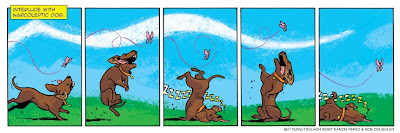 Rusty the dog actually has what's called narcolepsy with cataplexy, which I do not have. Cataplexy causes a person to lose muscle tone when feeling extreme emotions. The terrible catch-22 of it all is: you hear a funny joke and laugh, causing you to fall down (since you have cataplexy); subsequently, you hear Carrie's mom in your head screaming, "They're all gonna laugh at you!" the extreme shame of which causes you to fall again; the cycle continues.
Sometimes the cycles ends more quickly though. Say you are being chased by a bear. That scares you. You lose muscle tone. You fall. Bear eats you.
 Bear - 1 : Narcoleptics with Cataplexy - 0
Luckily, I do not have that...

Anyway, I hope this proves mostly educational, but also kind of silly. No, my narcolepsy will never go away, but it won't kill me either. It won't even cause physical pain per se. It sucks a whole lot and it is certainly inconvenient, but hopefully sharing my narcolepsy experiences with you will help me deal the stress of this disorder and will help readers understand how narcolepsy affects a person's daily life.
Feel free to post any questions you have about narcolepsy or bear attacks.
Subscribe to:
Posts (Atom)